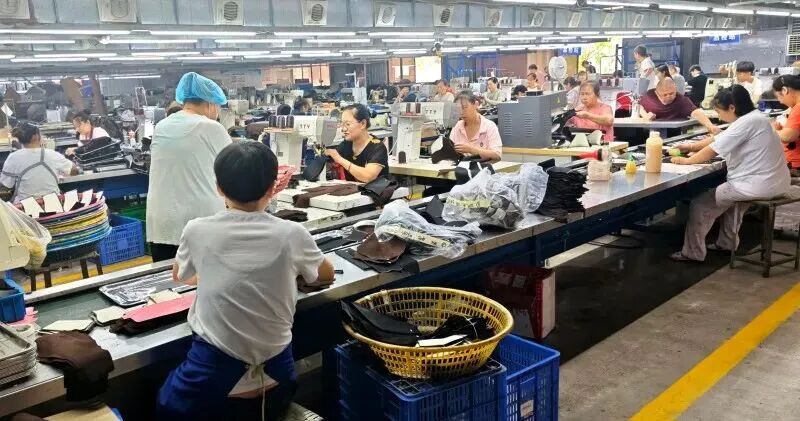
The European Footwear Confederation (CEC) has rallied behind a series of initiatives aimed at strengthening workforce skills, boosting research investment and tightening rules on online marketplaces as the sector prepares for the green and digital transition.
New regional skills partnerships launched
The Erasmus+ METASKILLS4TCLF project has announced the creation of 10 new regional public-private skills partnerships, officially recognised by the European Commission, to help address current and future workforce needs across Europe’s textile, clothing, leather and footwear (TCLF) industries.
Within the project, approved partnerships cover Portugal’s Norte region, Sweden’s Borås region, Poland’s Małopolska region and Spain’s Valencian Community for the leather and footwear sector. The partnerships, developed alongside the AEQUALIS4TCLF and TCLF SkillBridge initiatives, form part of the European Pact for Skills and bring together businesses, education providers and public authorities to support upskilling and reskilling.
METASKILLS4TCLF is also developing new training resources focused on digital and circular fashion through the European Virtual Fashion Campus, including e-books, quizzes, augmented reality applications and virtual reality learning environments. The project will also promote careers in the sector through student competitions, workshops and outreach activities, while creating a web-based tool to help validate migrants’ skills and improve labour market integration.
Industry urges tougher e-commerce enforcement
Meanwhile, the CEC is among 88 industry, consumer and environmental organisations that have urged the European Commission to close what they describe as a major regulatory loophole allowing non-compliant products to enter the EU through online platforms.
In a joint letter to Executive Vice-President Stéphane Séjourné, the coalition said an estimated 5.9 billion low-value e-commerce parcels entered the EU in 2025, with many failing to meet EU safety, environmental, ecodesign, intellectual property and Extended Producer Responsibility requirements.
The organisations are calling for the forthcoming European Product Act to require every product sold in the EU to have a clearly identified economic operator established within the EU or EEA. They also want online platforms selling products from non-EU sellers to assume legal responsibility where no other accountable economic operator exists, helping create a level playing field for compliant businesses.
Call for increased research funding
The CEC has also joined 86 European associations in calling for a significantly larger budget for the EU’s next Framework Programme for Research and Innovation (FP10).
The joint declaration argues that Europe must increase investment in research, development and innovation to improve productivity and competitiveness, citing the Draghi report’s warning that the EU is falling behind the U.S. and China. Signatories are urging EU institutions to strengthen industry-led collaborative research, support the full innovation pipeline from fundamental research to commercial deployment, and ensure FP10 is adequately funded for the 2028–34 budget period.


 京公网安备 11010202009378号