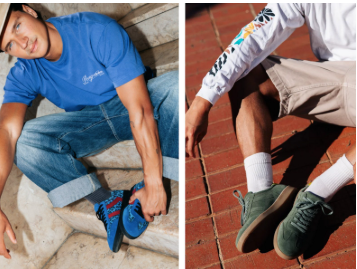
Portuguese brand Chabers Shoes emerges as a disruptive proposal in the footwear universe. It reinterprets traditional codes through the lens of contemporary needs, combining the sophistication of classic shoes with the lightness and functionality of sportswear-inspired design. Founded in November 2024, the brand was born from the vision of Hélio Bernardino, in partnership with brothers João and José Chagas, bringing together creative expertise and industrial know-how to respond to the demands of a contemporary lifestyle.
Dedicated to the fashion industry for nearly 30 years, Hélio Bernardino has not only helped launch the careers of several young talents, but has also remained deeply attentive to the style and mindset of new generations. His work, which involves absorbing both national and international trends, became even more significant when, over a decade ago, he acquired Elite Lisbon during a challenging period, taking on the mission of revitalising the agency and strengthening its position in the market.
It was around three years ago, however, that he found a new starting point in the world of footwear. After joining a family-owned factory with strong ties to international production, Hélio identified a gap that was still largely unexplored: "I started researching which models people were missing. I realised there were many people who needed to dress more formally, but didn’t enjoy wearing classic shoes. Or vice versa.”
It is precisely from this tension between functionality and expression that the identity of Chabers Shoes emerges: handcrafted, unisex footwear that bridges seemingly opposite worlds. "Each pair is elegant, but grounded in a relaxed concept.” The constructive balance is clear: the upper follows classic lines, while the sole is inspired by the comfort and flexibility of a sneaker. "Many people need to wear something sportier during the day, but they don’t want to show up in sneakers,” Hélio explains.
The brand’s most distinctive feature lies in its sole, developed in transparent material with colour embedded inside. This detail creates an unexpected and striking visual effect. "From a distance, it almost feels like we are exploring the idea of walking on air because of the transparency,” he adds. Beyond the aesthetic impact, developing this solution also involved technical challenges, particularly in concealing the shoe’s internal structures.
Production remains rooted in northern Portugal, in Felgueiras, a region historically connected to the footwear industry. It is here that each pair — whose name results from combining the surnames of the three partners — takes shape through the hands of specialised artisans. The largely manual process combines traditional techniques with a contemporary vision, prioritising durability, precision and attention to detail. Materials such as leather and suede reinforce not only quality but also comfort, elevating the functional object into a design piece created to accompany different rhythms and contexts.
Models: variations on a shared identity
Since its launch, the brand has introduced three initial models that, while sharing the same conceptual foundation, explore different visual and material approaches. These first proposals quickly became the most recognisable within the Chabers universe.
One of the most emblematic models features the signature sole with a red interior, becoming the brand’s most iconic image. The sobriety of the upper, often presented in neutral tones, contrasts with the vibrant colour of the sole, creating a balance between discretion and boldness. This combination has been especially appreciated for its versatility, adapting equally well to formal settings and more relaxed environments. Although the brand does not follow a rigid seasonal collection structure, these first models have become its most recognised and sought-after pieces.
Another standout proposal is distinguished by the use of suede, introducing a softer and more textured dimension to the design. This variation reinforces the sophisticated casual character of the shoe, making it a frequent choice for those who value comfort combined with a more relaxed aesthetic.
More recently, the brand has been exploring new colours within the transparent soles, such as vibrant blue, while maintaining transparency as a central element. These developments reveal an ongoing desire to experiment within a recognisable structure, allowing the brand to renew its offer without losing its identity.
Regardless of the model, versatility remains one of the Portuguese brand’s defining attributes. The same pair can be incorporated into very different looks, something that has helped attract diverse audiences: "Many of the young people tagging us on social media come from the streetwear or skate scene, which we didn’t expect. But we also had a gentleman who wore one of our pairs to a christening with a classic suit and sent us a photo. It appeals to many different tastes.”
Indeed, "the response has been incredible,” Hélio admits, referring to the positive reception following the launch of the first models. The diversity of the audience also confirms the brand’s ability to transcend traditional segments, reinforced by a bold and free campaign language: "I’ve been in this world for more than 30 years, so I wanted to bring a more daring fashion concept inspired by 1990s aesthetics.” More than simply following trends, the brand seeks to reinterpret them.
With a presence in international markets such as Spain, France, Germany and Switzerland, the strategy is based on continuous launches rather than seasonal collections, with new models being introduced regularly to maintain a dynamic relationship with consumers. At the same time, limited editions and collaborations with Portuguese artists are already planned, aimed at an audience that values exclusivity: "We want to appeal to collectors. There are people who truly love shoes and enjoy owning more exclusive models.”
More than footwear, Chabers Shoes proposes a new way of moving between worlds with lightness, identity and intention. Ultimately, it is a shoe designed to adapt to the complexity and fluidity of contemporary life, constantly navigating between formal and casual, tradition and innovation.