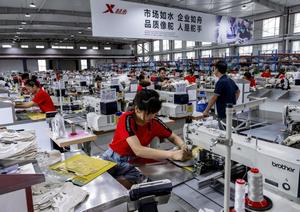
At the end of a year in which not all business expectations were fully met, it is time to try, as far as possible, to analyze the times to come. Undoubtedly, for leather production, including the high-end segment, this year showed a slowdown in activity compared to the previous two years.
Europe and the United States show economies that are undoubtedly up and down, although there are analysts who argue that in the coming year these markets will begin to show better numbers.
But since the APLF Leather, Fashion Access, Materials+, All China Leather Exhibition (ACLE) and APLF ASEAN – have their great influence on the huge market of China, it seems appropriate to dedicate this report to try to get closer to its reality with some data.
Footwear: Growth in value rather than volume
The leather footwear sector maintains a moderate but firm expansion. By 2026, consumption would be between 830 and 835 million pairs, with an optimistic scenario of up to 850 million. Although volume is not growing explosively, the most relevant evolution is in value. Chinese shoppers are looking for footwear that combines comfort, style and durability, driving the growth of “affordable premium” categories. Competition is no longer defined only by scale, but by differentiation, which opens up a competitive advantage for international exporters capable of offering high-quality leathers and good price-quality ratio.
Leather Goods: The Most Dynamic Sector
Leather goods are consolidated as the most dynamic category in leather consumption in China. The demand is driven by young professionals, frequent flyers and consumers with a growing appreciation for personal aesthetics. By 2026, this market could reach between 73 and 76 billion dollars, with an annual growth of more than 7% in favorable scenarios. Its rapid progress responds to the expansion of the middle class, the relevance of contemporary design and the symbolic value of leather as a noble material.
Leather Apparel: Renaissance Driven by Fashion and Durability
After a period in which synthetics gained prominence, leather garments are experiencing a notable return in large and medium-sized cities. Consumption is projected between 130 and 140 million units by 2026, especially in jackets and coats. The resurgence is linked to two main trends: the preference for durable products and the rise of the “urban premium” aesthetic, where leather retains its strong visual impact.
Young generations perceive leather as part of their personal expression, in addition to valuing it for its authenticity and for its lower environmental impact when it comes from certified processes.
Automotive Upholstery: The Biggest Consumer Driver
The automotive industry will be the main trigger for the increase in leather consumption in China by 2026. With a projection of 31 to 32 million vehicles manufactured, the country will continue to lead the global market. In particular, electric vehicles intensify competition in interior quality, making design and comfort key attributes. Between 45% and 55% of cars will include leather or equivalent materials in their interiors. In electric cars, this proportion may be higher. The total consumption of leather for this segment would be estimated between 110 and 140 million square meters.
Despite the advancement of high-tech synthetic materials, leather maintains remarkable advantages: it transmits status, durability and quality immediately. Even in an environment where sustainability is a central issue, manufacturers are looking for certified leathers and transparent processes. Supplier diversification is also a strategic priority for the Chinese automotive industry, opening up an important opportunity for global producers.
Aviation: Strategic Niche
The aeronautical sector – commercial and executive – is smaller, but demands leathers of very high technical characteristics: fire retardants, resistant and with controlled aging. By 2026, consumption is expected to be between 1 and 1.3 million square meters. The expansion of business jets, regional aircraft, and domestic aircraft production creates a valuable niche for specialty tanneries. Although the volume is small, the added value is high.
Upholstery in furniture: the rise of the “premium home”
The leather furniture segment is experiencing a resurgence associated with the “premium home” trend, especially among young families and urban consumers. After a slowdown linked to the real estate market, demand is growing again. By 2026, consumption of 60 to 70 million square meters is projected. Leather is revalued for its durability, ease of maintenance and natural aesthetics, becoming the protagonist of armchairs, sofas and designer furniture.
Manufacturers are looking for imported leathers to differentiate themselves from the large synthetic supply in the local market. This favors international suppliers capable of guaranteeing consistency, traceability and varied finishing proposals.
A 2026 of Opportunities
Overall, the outlook for the Chinese leather market for 2026 is clearly optimistic. All segments – from fashion to automotive – show growth. More importantly, the Chinese consumer is evolving towards behaviors that favor noble materials: they prioritize quality, demand traceability, seek durability, and value authenticity. For international producers, a real opportunity opens up to gain positioning in one of the most competitive and attractive markets in the world.
In this context, leather not only maintains its validity: it regains a central role as a premium material, driven by a market that increasingly values identity, sustainability and technical excellence.
For up-to-date information on other APLF events, please visit:
www.aplf.com
Researched and written by Mauricio Herzovich, Director of CueroAmérica. Edited and translated from original Spanish by Richard Smith
Sources:
-
Deep Market Insights: China Leather Goods Market Size & Outlook, 2025-2033.
-
Indexbox: China – Apparel Of Leather Or Of Composition Leather – Market Analysis, Forecast, Size, Trends and Insights.
-
Laotian Times: Mainland China’s Luxury Market Poised for Growth: Insights from MDRi’s 2025 Consumer Forecast.
-
Luxury Society Asia: 2025 Trends and Insights: Forecasting the Future of China’s Luxury Market.