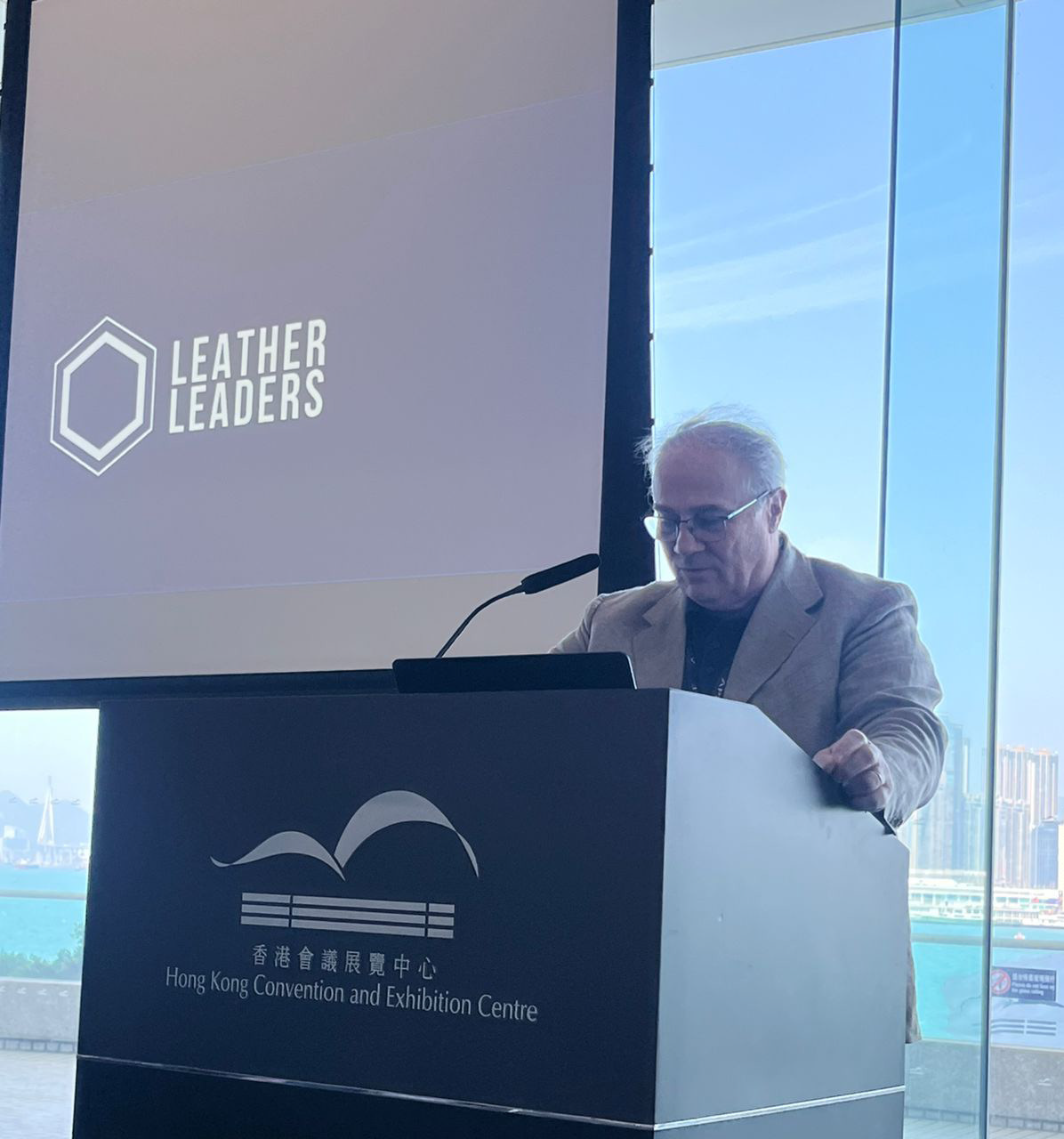
At the APLF held in Hong Kong on March 13, industry stakeholders gathered for the launch of Leather Leaders, a new initiative focused on strengthening supply chain collaboration and advancing science-led sustainability in the leather sector.
Opening the session, Fabrizio Nuti, President of UNIC, emphasized a significant shift underway in the industry. He revealed that there are already “documented cases” of tanneries producing carbon-neutral leather, underscoring the material’s potential not only to reduce emissions but to move towards climate-positive outcomes. He highlighted that, unlike synthetic alternatives, leather benefits from biogenic carbon—offering measurable opportunities for carbon storage and removal under evolving standards such as ISO 14068.
Nuti stressed that the future of leather sustainability will depend on robust science and accurate data. He pointed out that widely used lifecycle assessment (LCA) models often underestimate the environmental impact of synthetic materials, particularly oil-based alternatives. As new scientific insights emerge—especially around methane emissions and carbon accounting—the comparative positioning of leather is expected to strengthen further. “The only credible path to sustainability is for brands to buy materials that science and data prove are better,” he concluded.
The Leather Leaders programme, introduced during the event, is built on three core pillars: science and data, supply chain collaboration, and strategic alliances. The initiative aims to create a unified framework where brands, suppliers, and stakeholders can share reliable environmental data, align on sustainability goals, and drive measurable improvements across the value chain.
Importantly, the initiative has already attracted strong international attention. Many chemical product companies and tanneries outside Italy and Europe have expressed keen interest in participating in Leather Leaders. While it has been indicated that this opportunity may be opened more broadly in the future, for now, participation remains limited to the tanneries that are currently members of the programme.
In the keynote presentation, Federico Brugnoli, CEO and Founder of SPIN360, reinforced the importance of data transparency. He noted that over 85–90% of a brand’s environmental impact comes from purchased materials, making informed sourcing decisions critical. The programme encourages a “buy better” approach—favoring quality, durability, and verified environmental performance over simply reducing or replacing materials.
Discussions during the session also addressed broader industry challenges, including regulatory pressures, traceability requirements, animal welfare considerations, and the need for decarbonization. Participants acknowledged that while geopolitical uncertainty continues to affect global trade, sustainability expectations from both regulators and consumers remain firm.
A key takeaway from the conference was the role of leather as a “non-determining by-product” of the food industry, meaning its production does not directly drive livestock-related environmental impacts. This, combined with durability and long product lifecycles, positions leather as a material with unique sustainability advantages when assessed holistically.
The roundtable concluded with a call for stronger collaboration across the supply chain, including pilot tannery programmes, shared data platforms, and advisory frameworks to guide continuous improvement. As the industry navigates increasing scrutiny, initiatives like Leather Leaders aim to provide a credible, science-backed roadmap for the future of sustainable materials.


 京公网安备 11010202009378号