This is my last opinion this year, so as I thank all who read this column (especially those who correspond from every part of the leather world) and wish you all a peaceful break from work; it is wise to reflect on a turbulent year.
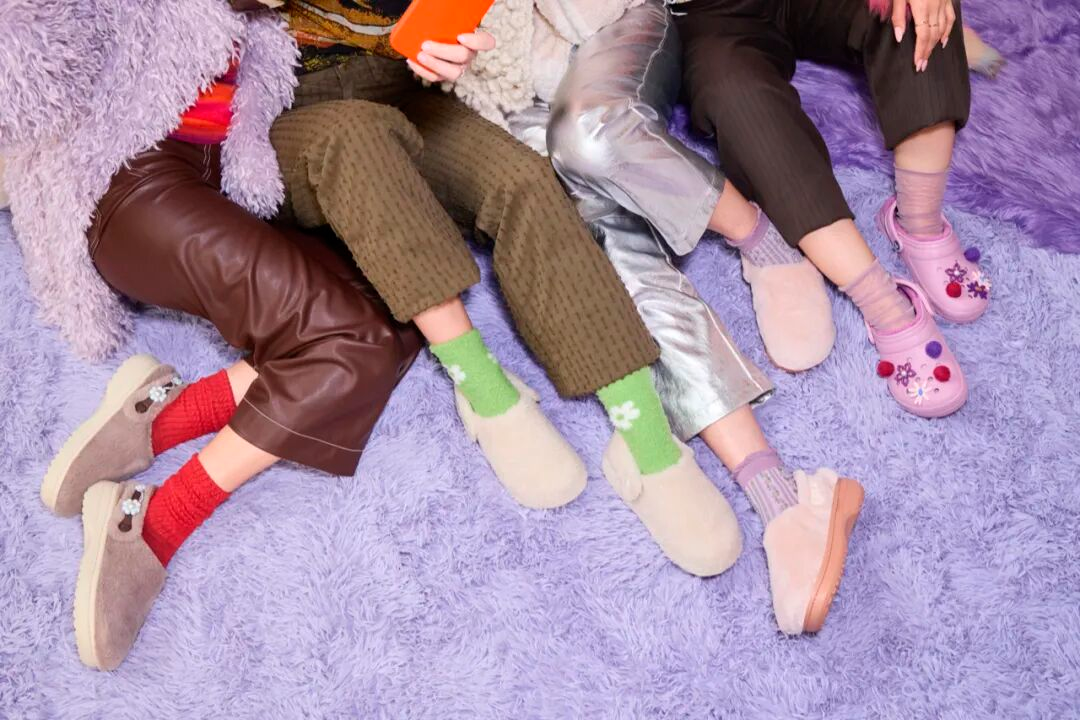
The market for leather did not collapse in 2025—but neither did it explain itself. Luxury recovered somewhat with sharp contrasts between brands and regions. Automotive leather continued to face strategic uncertainty rather than outright decline. It is now a real battleground between science, emotion, cost and the worst of greenwashing. Footwear and upholstery showed some resilience at the value and heritage ends but struggled in the middle. Trainers (sneakers) were dominant, so it has been a struggle for leather. They now constitute around 50-60% of what consumers have in their wardrobes, albeit in 2024 they only accounted for 30-40% of sales – but still a lot. As we leave the year, perhaps we can see a suggestion of a return to more conventional footwear.
Wastage figure exposes a failure of markets
What is clearer is that hides and skins continue to be lost to leather making. If true, the 40% wastage figure belongs at the very centre of any 2025 sustainability analysis of leather, because it exposes both a failure of markets and a lack of strategic thinking about capacity, logistics and material value. LHCA’s more recent analysis suggests around 134 million hides are wasted annually, with associated emissions in excess of 40 million tonnes CO₂‑equivalent from decomposition. This flips what should be a circular‑economy success story into a methane and carbon problem.
One of the quiet failures of 2025 was who controlled the leather narrative
Anti-leather arguments became simpler and more emotionally effective. While our leather industry now has a better story, grounded in scientific proof, responses remained technical, fragmented and defensive. In large part, the leather industry still talks, or shouts, mainly to itself. I retain my longstanding concern that by allowing this fragmentation, no one is properly speaking up for leather and this can only be the task globally for Leather Naturally who need the support and membership of far more tanneries and industry stakeholders. Others have regional or sectoral constituents they must favour. It is not right to leave such a task only to volunteers which a greater membership could transform. Branding, storytelling and legitimacy of leather have been, and remain, underfunded. We must explain why leather exists, not just how it is made.
Part of the thought process needed to achieve these next lies around sustainability where the term “circular economy” is not enough and does not cut through in the world of social media. I have pushed the concept of a Nature Economy working together with the Craft Economy, but leather still sits awkwardly—but importantly—between agriculture, manufacturing and craft. No single sustainability framework properly accommodates that hybridity.
Biodiversity, land use, water management and product longevity remain poorly captured in mainstream metrics. Equally, carbon-only thinking is too limited for a biological, long-life material such as leather. So, as narrative fatigue meets material reality, leather continues to be discussed as a problem rather than as a solution for unavoidable livestock by-products.
Automation, AI‑supported cutting/grading, and digital design have continued to spread, especially in larger tanneries and brand groups, widening the technology gap with smaller craft producers who struggle to fund compliance and digital upgrades.
If we do not change fundamentally, we will not exist
This pulls us towards understanding the industry’s need for renewal, as put forcefully by Dr Luis Zugno. If you have not read his recent opinion in ILM, you must. There is a dialogue between his “material modernism” and what might be called my “craft humanism”. A neat battle between the engineering and innovation logic: “If we do not change fundamentally, we will not exist” and the moral and cultural logic: “If we change without understanding why we exist, survival is meaningless.”
Leather has no place in the EUDR
Another realm, which is whether the industry is being regulated towards better outcomes – or simply towards better paperwork? We have certainly seen the divergence of regulatory intention and impact. I was contacted by a friend from the 1970s who told me I need to be more specific in writing that leather should be removed from the EUDR legislation, so let me be quite clear. It has no place there, as leather is not a driver for deforestation.
But its unwise addition is indicative of why so much EU rule making ends up in delay and reputational damage (to the EU). Where is the value in overloading legislation with unjustifiable add-ons that only giant conglomerates have any chance of managing? This is not a sign of wisdom in a livestock world where we must support the surviving nomadic and small farmers around the world who are at the forefront in recovering lost biodiversity. Governments everywhere must heed the fact that SMEs—such as family-owned tanneries—face compliance overload, not because they reject sustainability, but because regulatory pace and complexity exceed managerial capacity.
Since 2025 was a year in which structural issues were exposed rather than resolved, 2026 will become a year of hard choices rather than easy narratives. Regulation has not improved clarity, the sustainability narrative is not good enough, markets will not return if the industry just holds its nerve and leather’s story is still not understood by consumers.
And as a backdrop to the turmoil of geopolitical change and disruptive technologies, we have aging demographics and climate change as fundamental and costly issues that are being largely overlooked: and in many countries such as the UK, the peace dividend is over and cash strapped governments are having to find large sums to re-equip their military forces.
While 2025 did not mark the end of the leather industry, it did remove the illusion that incremental tweaks will be enough. Path Dependency is not a win, as Dr Luis Zugno says, “we cannot get there from here.”
If 2025 taught us anything, it is that leather’s future will not be secured by slogans or silence—but by clarity, competence and the courage to explain what we do, and why it still matters.
mike@internationalleathermaker.com
You can find Dr Mike Redwood across social media at @michaelredwood.


 京公网安备 11010202009378号







.jpg)
