Indian researchers have turned discarded fish skin into a new form of leather offering a fresh income stream for fishing communities and the leather industry.
According to
Times of India, the work was led by the department of fish processing technology at the College of Fisheries in Mangaluru under Karnataka Veterinary, Animal and Fisheries Sciences University Bidar.
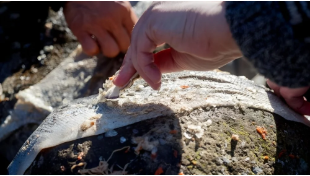
The team focused on fish skin that usually ends up as waste after fillet production.
The study was supervised by Manjanaik Bojayanaik professor and head of the department of fish processing technology. He said the idea was simple. Take what the industry throws away and turn it into something valuable.
The researchers worked on the unicorn leatherjacket fish found along the Indian coast. This fish grows up to 59cm and weighs around 1.3kg. Its skin is thick elastic and rich in collagen which makes it suitable for leather.
“The skin is tough elastic and rich in collagen making it an excellent raw material for tanning applications”
– Manjanaik Bojayanaik, Professor and Head Department of Fish Processing Technology
College of Fisheries Mangaluru KVAFSU Bidar
The research has gained international attention after being published in Springer Nature journals. It shows that fish skin leather can support a circular economy by reducing waste and lowering the environmental cost of leather production.
“The initiative not only addresses fish processing waste but also creates new income opportunities for fishing communities”
– Manjanaik Bojayanaik
The team also tested skins from Malabar grouper, cobia catfish and spinycheek grouper. This suggests that fish leather production could be scaled across India using multiple species.


 京公网安备 11010202009378号









.jpg)
