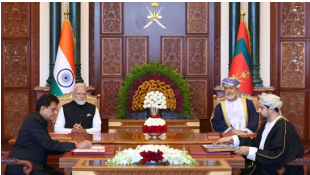
Prime Minister Narendra Modi’s visit to Oman and the signing of a Comprehensive Economic Partnership Agreement is being seen as a major reset in economic ties between the two countries.
The deal allows nearly 99% of Indian exports to enter Oman duty free. This could give a strong push to Indian exporters even though total trade between the two countries is still around $10 billion.
Trade experts say the current trade mix leaves a lot of room for India to grow. Oman mainly sells petroleum, gas and fertilisers to India.
India exports refined petroleum, machinery, leather, footwear, iron and steel to Oman.
“The real scope for India lies in labour intensive sectors like textiles, clothing, leather, footwear, leather garments and other leather products.”
– Jayant Dasgupta, Former Ambassador to the WTO
With duty free access these products can become cheaper and more competitive in Oman. This could lead to higher exports and more jobs in India.
Oman may not be a top trading partner for India. But analysts say even smaller markets matter when exporters want to reduce dependence on traditional destinations.
The agreement is also expected to unlock long pending foreign investment. Official data shows that FDI flows between India and Oman have stayed low at around $600 million each way over the last two decades.
This is despite more than 6,000 joint ventures operating in Oman.
The deal allows 100% FDI by Indian companies in Oman. Experts say this could encourage Indian firms to use Oman not just as a sales market but also as a manufacturing and investment base.
Strategically the pact fits into India’s wider push in the Gulf. After a trade deal with the UAE India now sees Oman as a gateway to the broader Gulf Cooperation Council market including Saudi Arabia.
Oman offers land availability support for large scale industry and growing opportunities in renewable energy including green hydrogen where Indian firms are already active.
Prime Minister Modi has called the agreement historic and said it will boost trade build investor confidence and open new opportunities across sectors.
If duty free access lifts labour intensive exports fresh investment follows and Indian companies use Oman as a Gulf gateway the CEPA could turn a small trade relationship into a long term strategic partnership.


 京公网安备 11010202009378号








.jpg)
